
Secure Quick Release Axles. Where Sensible Bike Security Begins.
Secure Quick Release Axles. Where Sensible Bike Security Begins.
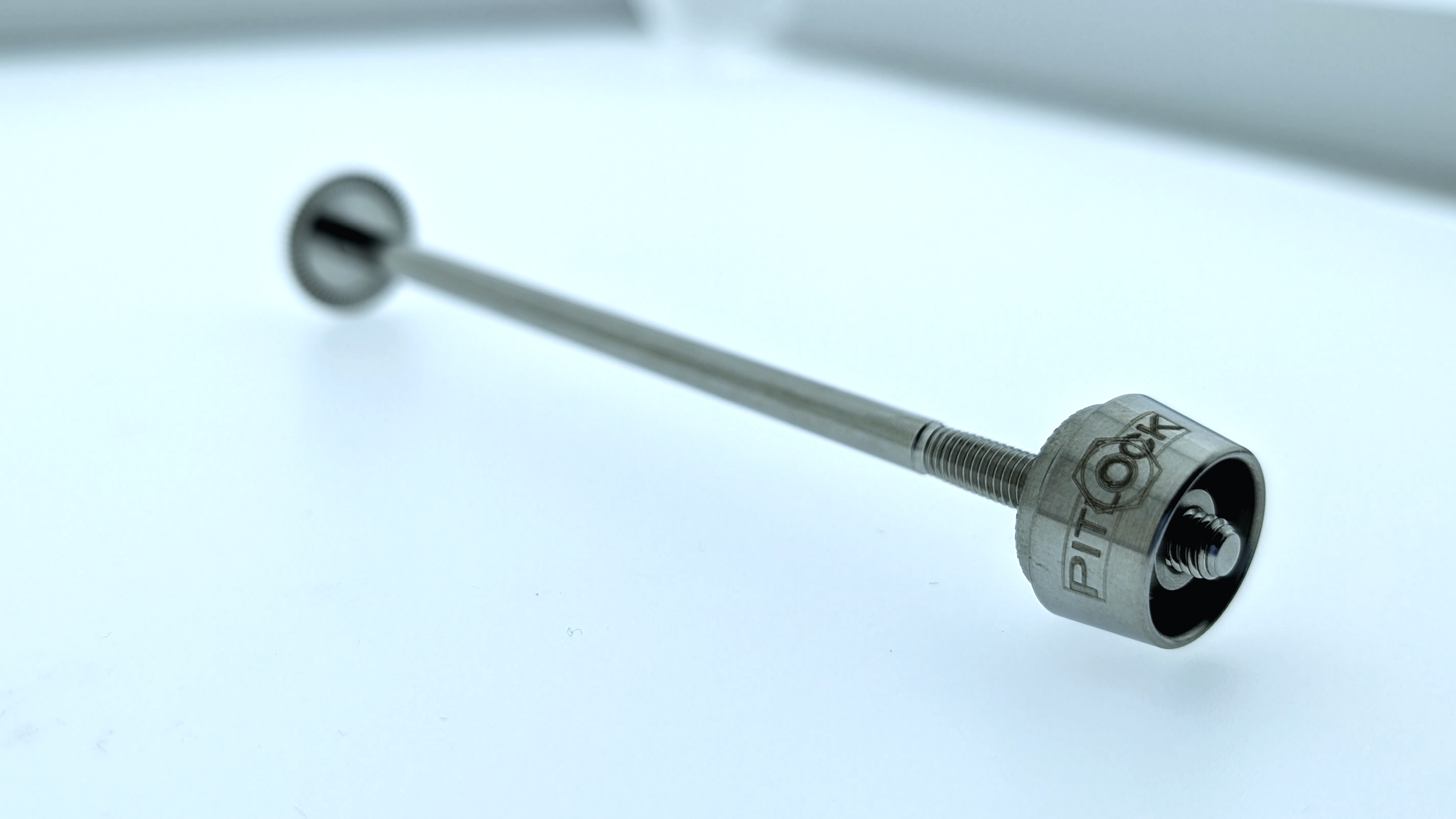
Quick release axles are practical, but they are also one of the biggest weak points on a bicycle. One quick move is enough and a wheel or seatpost is released. Pitlock replaces classic quick release skewers with coded locking axles and removes exactly this decisive time advantage.
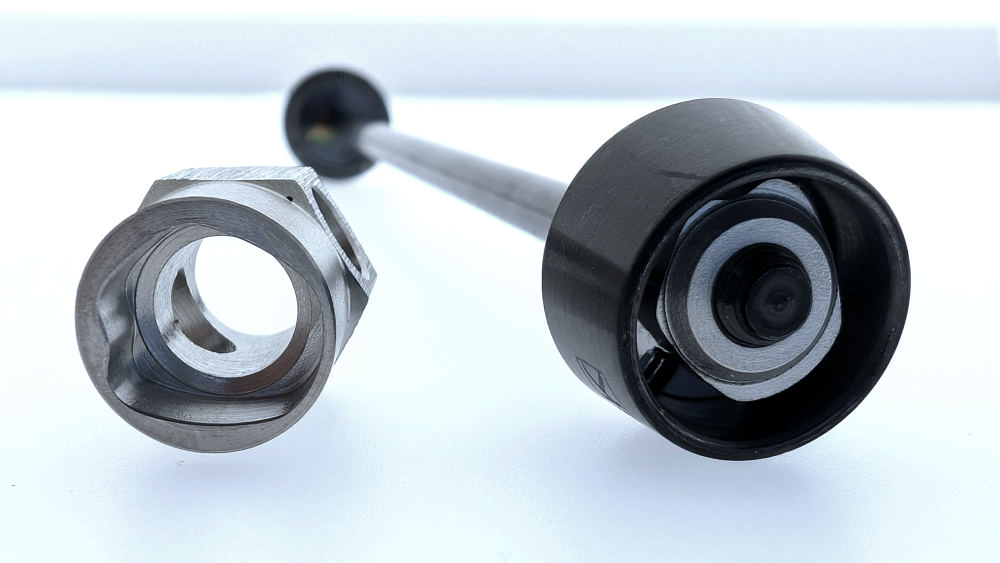
Pitlock quick release locking system in black with coded nut
A good lock does not protect everything
High quality bicycles were secured with good locks. And still taken apart within seconds.
If a bike is locked to the front wheel with a U lock or chain lock, in the worst case only that wheel remains. The frame and other components are gone.
If the bike is locked to the frame, the front wheel or other easily removable parts such as the seat are missing when you return.
It is simple logic. A high quality lock only protects what it is attached to. All other components remain vulnerable. Anyone who wants to secure a bicycle properly needs more than a single strong locking point.
This is exactly where the idea behind Pitlock was born.
The classic weak point on a bicycle
Quick release skewers can be opened without tools. One simple movement is enough. Particularly affected are:
- front wheels
- rear wheels
- seatposts
This is especially relevant in everyday urban riding. Short stops are part of daily life. A quick visit to the bakery, a coffee, dropping children off at school. The bike is locked, but not every component is secured. This is exactly when quick release systems show their weakness.
Pitlock addresses exactly this issue. Not by promising absolute security. But by eliminating the biggest weakness of quick release systems.
What does it mean to replace a quick release axle?
Instead of a classic quick release skewer, a coded locking axle is installed. Visually discreet. Functionally very different.
Without the matching PIT key, the axle cannot be opened. There is no tool free access. No quick grab. No spontaneous removal.
Front and rear wheels can be secured this way. The same applies to the seatpost, provided it is clamped with a quick release. All locks can be keyed alike. One key for several bikes. This is especially practical for families or everyday use with multiple bicycles.
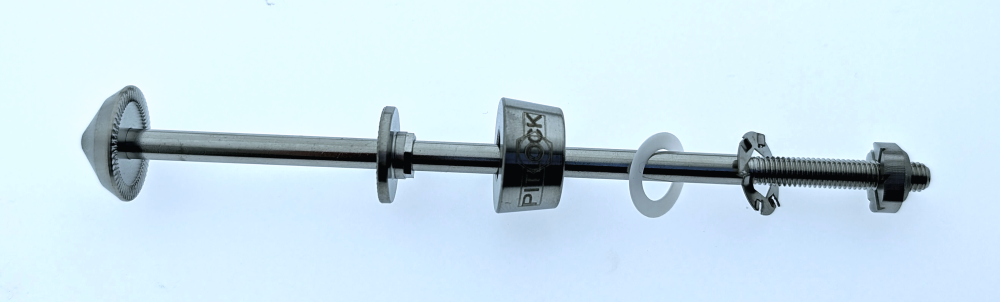
The individual components of a Pitlock locking axle
How the Pitlock system works
To understand the system, it is worth taking a look at the individual components. They are not complex. But they are precisely coordinated.
The coded nut
The coded nut is the heart of the system. Its shape corresponds exactly to the internal profile of the PIT key. Without this coding, it cannot be loosened.
More than thousand different codings are available. The likelihood that two identical codes are in circulation by chance is extremely low. The key engages precisely with the coded nut. Without the correct key, the lock cannot be turned or opened without destruction.
The coded nut ensures that a quick release skewer can no longer be loosened without a tool, eliminating the decisive time advantage.
The spring washer
The spring washer mechanically locks the system. Its springs engage in the grooves of the coded nut.
Only when the PIT key is pressed into the lock do the springs retract, allowing the nut to be turned.
Without the key, the lock remains blocked.
The PTFE washer
Between the locking ring and the spring washer sits a PTFE washer. PTFE is also known as Teflon.
The material is extremely low friction and prevents the components from bonding together. This ensures reliable function even after years of everyday use. PTFE washers are wear parts and can be replaced if necessary.
Locking ring and pressure washer
The locking ring is the component that holds the individual parts of the lock together. Among other things, it houses the spring washer and the PTFE washer. Only through this unit does the coding become effective.
Between the frame and the locking ring sits the pressure washer. Its serrated surface ensures a secure grip and prevents the lock from twisting under load. This keeps the axle stable even during daily use.
Stainless steel as a deliberate material choice
Stainless steel is the basis of all load bearing Pitlock components. The material is corrosion resistant, strong and durable. This is crucial for security relevant parts.
The lock remains functional even in rain, dirt and years of daily use. Components do not seize and the mechanism remains reliable and smooth.
For us, this means less maintenance, consistent performance and a product that does not need to be replaced after a short time. Stainless steel is not an added argument at Pitlock. It is the prerequisite for a locking system designed for long term use.
Who is this system for?
Pitlock is designed for anyone who uses their bicycle regularly. Particularly well suited for:
- urban everyday riders
- commuters
- families with multiple bicycles
- high quality bicycles with quick release axles
The key factor is time. A quick release can be opened in seconds. A Pitlock system requires the correct key or heavy tools. This hurdle is often enough to deter opportunistic theft.
No absolute promise. But a clear difference.
Pitlock is not a miracle solution. With enough time and heavy tools, almost anything can be overcome. What matters is the effort required.
Where a quick release can be opened immediately, Pitlock requires time, tools and attention. In many everyday situations, this is enough to discourage theft.
Which components can be secured?
The system described here is designed for quick release axles on front and rear wheels. Another classic application is the seatpost, provided it is clamped with a quick release and can be opened without tools.
In addition, Pitlock offers further solutions to secure safety relevant bicycle components. With the so called Pitstoppers, almost all common hex socket bolts on a bicycle can be protected against unauthorized loosening. This includes bolts on stems, brakes or accessories.
The principle is always the same. Freely accessible connections are replaced by coded locks. Quick access is eliminated.
The beginning of a system
Securing quick release axles was the starting point of Pitlock. It still shows what the system is about today. Identifying weak points on a bicycle and replacing them with durable, well thought out solutions.
Not loud. Not exaggerated. But functional and easy to understand.
Frequently asked questions
Can I install Pitlock myself?
Yes. Replacing a quick release skewer with a Pitlock locking axle takes only a few minutes and does not require a workshop. Installation instructions are included. Of course, Pitlock can also be installed by your local bike shop.
Which axle standards are supported?
This article refers to classic quick release axles with a 5 millimeter diameter on front and rear wheels, as well as quick release seatposts. Pitlock also offers separate solutions for thru axles and solid axles.
What happens if I lose my key?
Replacement keys or additional locks can be ordered using the code number printed on the code card. The code card should therefore be stored safely. The code can also be saved in your customer account on pitlock.com.
Conclusion and next step
If you want to secure quick release axles on your bicycle, the Pitlock Set 01 is a sensible starting point. It replaces classic quick release skewers with coded locks and integrates easily into everyday riding.
Read also
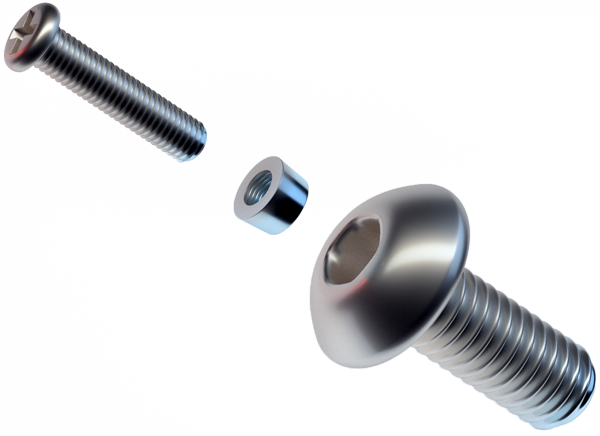
Pitstopper, securing hex socket screws
Pitstopper secure hex socket screws invisibly and reliably. The small inserts block Allen screws and can only be removed with the special release screw. Available in different sizes from M5 to M10.
Read More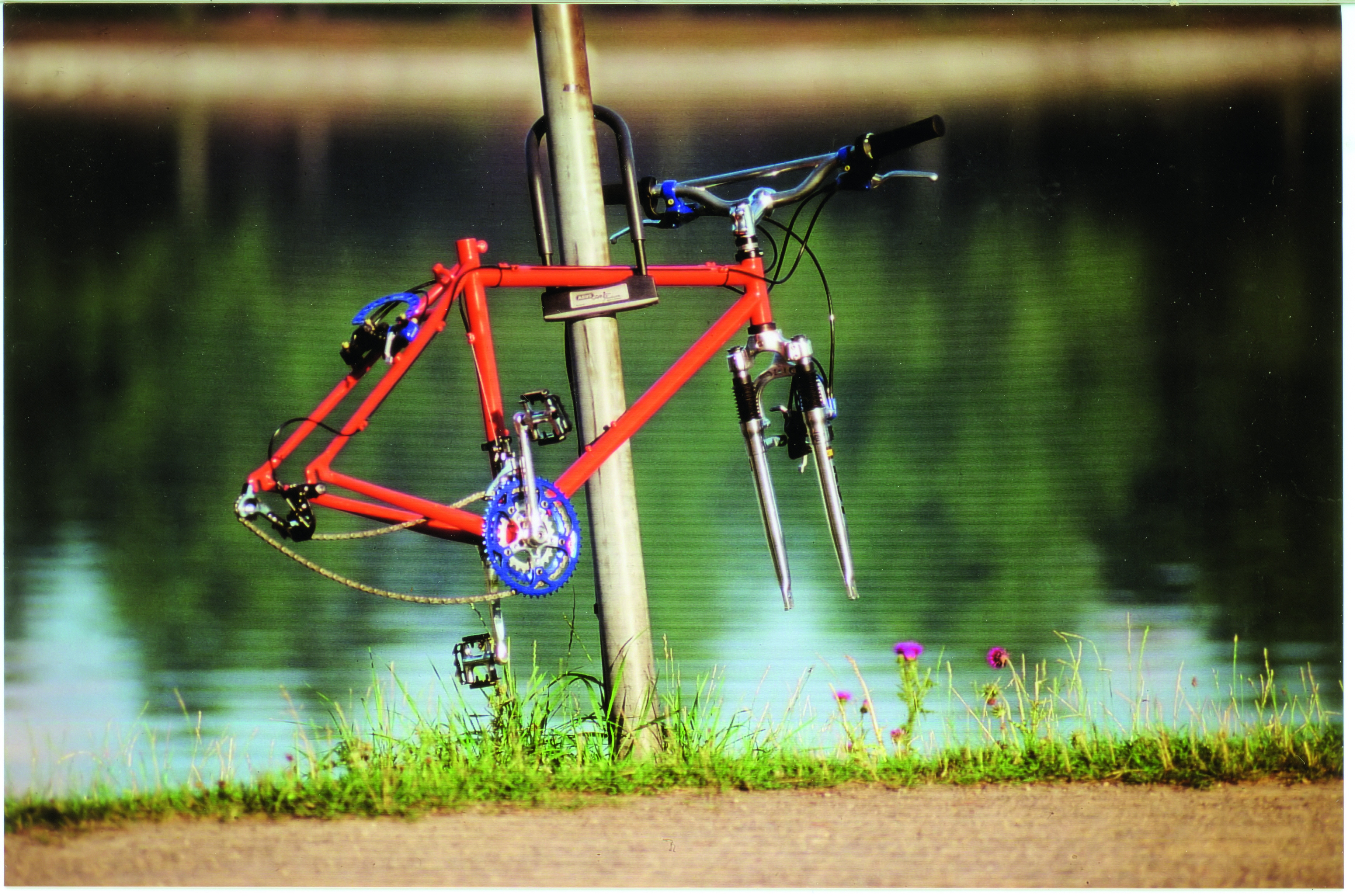
Can Pitlock be cracked? Sure!
Wondering if Pitlock can be cracked? This article explains why it’s technically possible and why Pitlock still offers real protection when locking your bike.
Read More
Find the right Pitlock set for your bike
Looking to secure your bike with Pitlock? This guide shows what to check and how to find the set that fits your bike best.
Read More