
Thru Axles on Your Bike: Differences, Dimensions, and How to Secure Them Properly.
Thru Axles on Your Bike: Differences, Dimensions, and How to Secure Them Properly.
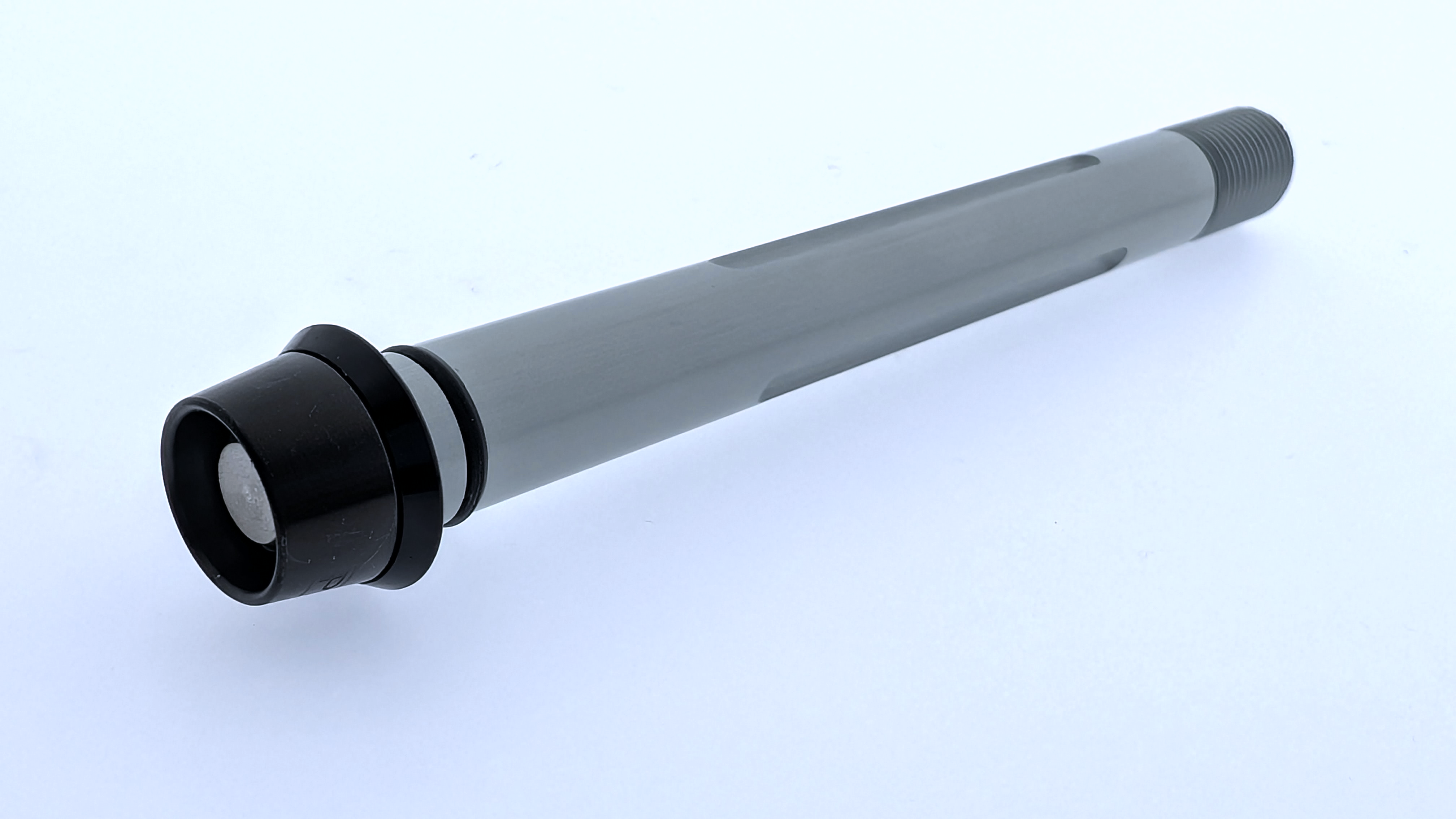
Thru axles are today's standard. They ensure a firm fit of the wheel, greater stiffness, and precise brake alignment. At the same time, they bring a new level of complexity, because not all thru axles are the same. Length, diameter, thread pitch, and the fork or frame interface must match exactly.
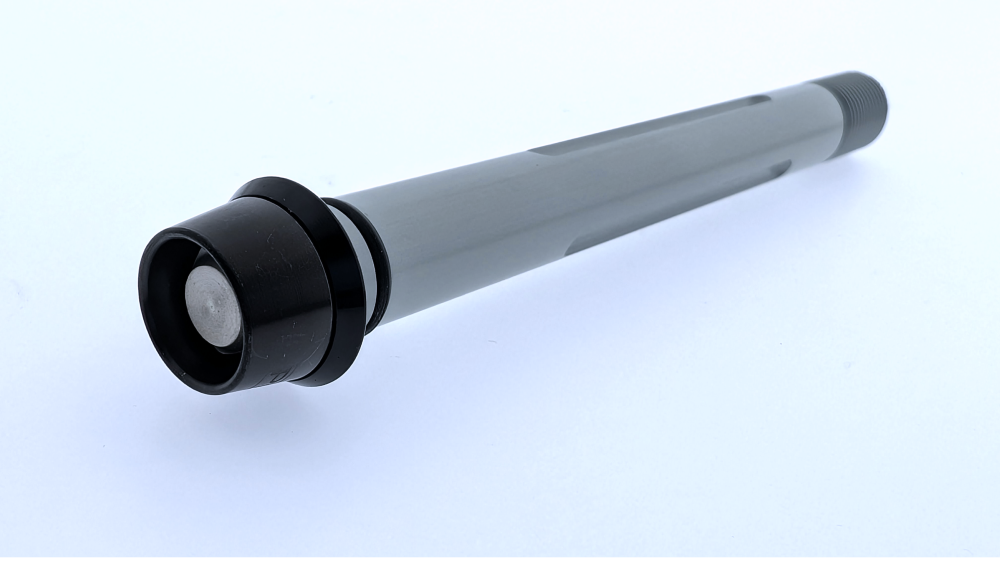
Anyone looking to replace or secure thru axles should be familiar with these differences. Only then can wrong purchases, installation problems, and unnecessary effort be avoided.
What is a thru axle?
A thru axle is an axle that passes through the hub and is screwed directly into the fork or frame. The wheel is not only held in place by clamping force but is also positively located in the frame via the axle.
This design ensures a reproducibly precise wheel position. Especially on bikes with disc brakes, this is critical, as even small deviations can lead to rubbing noises or uneven wear.
Why thru axles are now the standard
Thru axles are structurally more stable and guide the wheel more precisely. They handle braking forces more effectively and prevent flex under load. This is why they have become the dominant choice, particularly on bikes with disc brakes.
However, this advantage comes with a downside: thru axles are far less standardised than classic quick release skewers.
The key differences between thru axles
Axle diameter
Two diameters are most common:
- 12 millimetres
- 15 millimetres
12 millimetres is frequently used at the rear wheel, 15 millimetres predominantly at the front. The diameter is fixed and must match the hub.
Axle spacing
The axle spacing describes the distance between the dropouts of the fork or frame. Typical dimensions are:
- 100 or 110 millimetres at the front
- 142 or 148 millimetres at the rear
The Boost standard with 110 millimetres at the front and 148 millimetres at the rear is common on many newer mountain bikes. Here too: the spacing must match exactly.
Overall axle length
In addition to diameter and spacing, the overall length of the axle is critical. It determines whether the thread engages fully and the axle seats correctly.
Even a deviation of a few millimetres can mean the axle cannot be threaded in fully or does not clamp securely.
Thread length and thread pitch
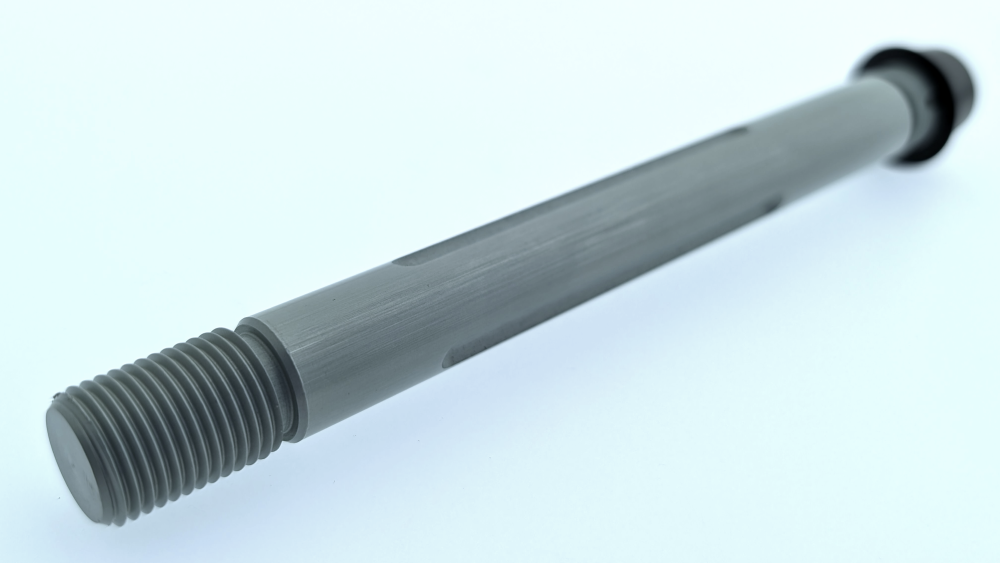
The thread is a particularly critical detail. Common variants include:
- M12 x 1.0
- M12 x 1.5
- M12 x 1.75
- M15 x 1.5
An incorrect thread pitch can damage the threads in the frame or fork. This mistake cannot be corrected by careful installation and must be avoided at all costs.
Fork and frame specifics
Different thru axle standards are used depending on the manufacturer. These include Maxle interfaces, X-12 systems, and special designs such as Suntour QLoc.
While Maxle and X-12 systems use a standard thread, the QLoc system has no thread in the fork. Clamping is done laterally, which is why special adapter solutions are required.
In addition, dropouts differ not only in their width but also in their geometry. Depending on the fork or frame, the contact surface can be flat, tapered, or slightly recessed. This shape affects how the thru axle rests against the dropout and whether shims or spacers are needed.
Measuring thru axles: why it matters
Many problems with thru axles arise not from complex technology but from imprecise measurement. Even an incorrect thread pitch or a slightly off length can result in an axle that does not fit or does not seat securely.
To select the right thru axle, always measure the original axle:
- Axle diameter
- Overall length
- Thread pitch
Since thread pitch is difficult to identify reliably by eye, comparing against a reference scale or a thru axle dimension chart is recommended. This is the most reliable way to avoid wrong purchases.
Why thru axles can be a theft risk
Many stock thru axles can be released with an integrated lever or basic tools. For opportunistic thieves, this is often enough to remove a wheel in a short time.
Particularly during brief stops or when leaving a bike in public, this is a real weak point. The frame is locked, but the wheel is not.
Securing thru axles: what does PITLOCK offer?
Anyone who wants to secure their thru axles needs a solution that fits the exact thru axle standard in use. Differences in diameter, length, thread pitch, and interface leave no room for compromise.
PITLOCK replaces the stock thru axle with a coded security axle. Without the matching PIT key, removing the axle requires considerable effort or destructive methods.
Depending on the bike and interface, different solutions are available:
- Coded thru axles with standard thread
- Thru axles with adapter sleeve for systems without a thread
- Special solutions for laterally clamping systems such as Suntour QLoc
The security thru axles are made from high-quality aluminium and stainless steel and are designed for permanent everyday use. All variants are matched precisely to the dimensions of the respective original axle.
Every thru axle is part of a coded system. Should a key be lost, a replacement can be supplied based on the code ID.
A note on double lead thread axles
Some thru axles use so-called double lead or double thread designs. Two thread starts run in parallel, so the axle advances further per turn than a conventional single thread.
We currently do not offer a security solution for this design. Double lead thru axles are not compatible with systems designed for conventional single threads. In such cases, the original axle fitted by the manufacturer remains the best option for now.
No absolute promise. But a clear difference.
PITLOCK is not a cure-all. Given enough time and heavy tools, almost anything can be overcome. What matters is the effort required.
Where a stock thru axle is released quickly, a secured axle demands time, tools, and attention. In most everyday situations, that is enough to deter opportunistic theft.
Summary
Thru axles offer clear technical advantages but are far less standardised than classic quick release skewers. Differences in diameter, length, thread pitch, and interface type make careful selection essential.
Anyone who correctly identifies their thru axle and chooses a precisely matching security solution ensures a reliable wheel fit while significantly reducing the risk of a quick theft.
Still unsure? We are happy to help.
If you are unsure how to identify your thru axle, contact your local bike shop or simply send us an email. With the dimensions of your original axle or a brief note about your bike model, we will be glad to point you in the right direction.
Read also
Why We Are Temporarily Pausing Deliveries to the EU
From 12 August 2026, the new EU Packaging Regulation (PPWR) applies. We explain why we support its goals, but why registering in every single EU country isn't manageable for us as a microenterprise right now, and what that means for our shipping.
Read More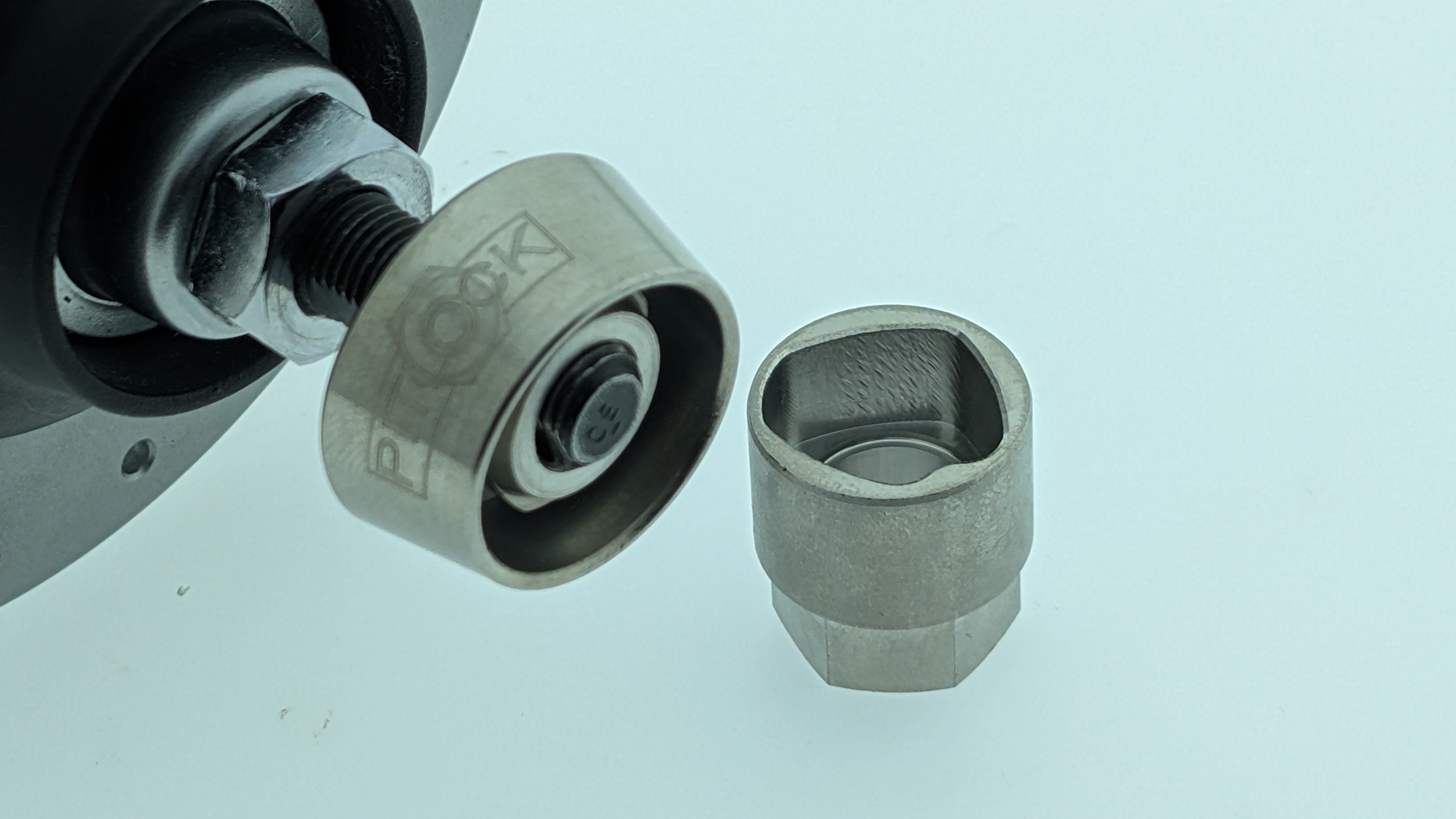
Pitlock Code Recovery: What to Do When Your Key or Code Is Missing
Lost your Pitlock key or code card? In most cases there is a solution. Here is what to do depending on your situation.
Read More
Protect Every Bolt on Your Bike: The Pitstopper Guide (+ Where to Buy in the US)
Standard Allen bolts are the weakest link in most bike security setups. Any hex wrench opens them in seconds. Pitlock Pitstoppers block access to hex sockets on saddles, racks, e-bike motor covers, and more. Here's everything you need to know, plus where to buy Pitstoppers in the United States without paying international shipping from Germany.
Read More